
Explore the country and target locations of the investment opportunity.
Country
Lao PDRRegion
- Vientiane Province
- Champasak Province
- Luang Prabang Province
- Luang Prabang Province
Situate the investment opportunity within sustainability focused sector, subsector and industry classifications.
Sector
FinancialsDevelopment need
In Lao PDR, access to financial services remains a significant challenge, with only 26.8% of the adult population having an account at a formal financial institution. There’s a critical need for financial inclusion, improved financial literacy, and access to credit for small businesses and marginalized communities. (1)(2)
Policy priority
Lao PDR’s National Socio-Economic Development Plan (NSEDP) for 2021-2025 emphasizes the importance of expanding financial services to rural areas, improving financial sector stability, and strengthening the regulatory framework to promote inclusive growth.(3)
Gender inequalities and marginalization issues
In Lao PDR, only 23% of women have an account at a financial institution, compared to 31% of men. Women entrepreneurs face constraints in accessing finance due to limited collateral, credit history, and financial literacy. Addressing these challenges could foster gender equality and financial inclusion. (4)(5)
Investment opportunities introduction
Nearly 86% of current funding needs of MSMEs in Lao PDR remain unmet. Investment opportunities in Lao PDR’s financial sector include microfinance institutions, digital financial services, and capacity building for financial literacy, which can contribute to economic growth and poverty reduction. (6) (18)
Key bottlenecks introduction
Key challenges in Lao PDR’s financial sector include weak regulatory frameworks, insufficient financial infrastructure, and a lack of financial literacy among the population. These bottlenecks hinder the development of a more inclusive financial sector, limiting access to finance for underserved communities.(7)
Sub Sector
Corporate and Retail BankingDevelopment need
Despite economic growth, Lao PDR’s corporate and retail banking sector remains underdeveloped. Only about a third of the population has access to formal banking services, leaving a significant proportion of the populace and businesses underserved. This lack of access to financial services hampers economic development and growth.(8)
Policy priority
The Lao PDR government, in its 9th National Socio-Economic Development Plan, has identified the expansion of corporate and retail banking services as a primary goal. This plan underlines the importance of strengthening the banking sector to encourage economic development and growth.(9)
Gender inequalities and marginalization issues
Only about 29.1% of adults in Lao PDR have a bank account, with women having slightly higher access at 31.9%. This disparity in access to banking services, particularly in rural areas, highlights the necessity for more inclusive banking practices. (10)
Investment opportunities introduction
Significant opportunities exist for investment in the corporate and retail banking sector in Lao PDR. These include the expansion of banking services to rural areas, development of digital banking services, and provision of financial literacy programs (11)
Key bottlenecks introduction
The corporate and retail banking sector in Lao PDR faces key challenges such as a lack of financial literacy among the population, limited banking infrastructure in rural areas, and a need for stronger regulatory frameworks to ensure the stability and integrity of the banking sector (12)
Industry
Consumer FinanceDiscover the investment opportunity and its corresponding business model.
Investment Opportunity Area
Access To Finance For MSMEs With a Focus on Smallholder Farmers
Business Model
Invest in solutions that leverage technology and innovative finance to boost
access to key financial products for MSMEs, especially smallholder farming
families that are dependent on agriculture for their livelihoods. Illustrative
examples of enterprises active in this space are:
The Agricultural Promotion Bank (APB) is a state-owned bank in Lao PDR that
provides financial services to farmers and rural communities. It was established
in 1975 and has since been providing loans and other financial services to
farmers and rural communities [13]
Learn about the investment opportunity’s business metrics and market risks.
Market Size and Environment
Access To Finance For MSMEs With a Focus on Smallholder Farmers
Market Size (USD)
USD 100 million - USD 1 billion
CAGR
> 25%
Critical IOA Unit
The number of firms operating in finance sector in 2022 increased by 122 firms, a 40% increase from 2021.The finance industry contributed $834 million to the GDP in 2022
Indicative Return
Access To Finance For MSMEs With a Focus on Smallholder Farmers
IRR
10% - 15%The average interest rate for commercial financing is 9-10% per annum, supporting high returns from the market.
Investment Timeframe
Access To Finance For MSMEs With a Focus on Smallholder Farmers
Timeframe
Medium Term (5–10 years)Lao PDR’s banking sector is state-dominated, with limited services catering to MSMEs. Given ongoing efforts to enhance financial stability and to modernize banking infrastructure, a 5-10-year investment timeframe is suggested to mature these initiatives targeting MSMEs and agriculture.
Ticket Size
Average Ticket Size (USD)
> USD 10 millionMarket Risks & Scale Obstacles
Business - Business Model Unproven
The business model, while theoretically sound, has yet to be proven in practice in the Lao PDR market. Limited access to finance remains a key challenge for MSMEs, particularly in the manufacturing, production, and agricultural sectors.
Capital - Limited Investor Interest
The financial sector in Lao PDR is still developing and faces several challenges. A lack of investor interest could pose a significant risk, particularly given the necessary capital expenditures required for infrastructure development
Capital - CapEx Intensive
High upfront costs are associated with necessary infrastructure development and establishing financial mechanisms for MSMEs. This CapEx intensity could present a barrier to entry and scale for the IOA.
Read about impact metrics and social and environmental risks of the investment opportunity.
Sustainable Development Need
Financial Inclusion: MSMEs and agricultural enterprises in Lao PDR face growth
constraints due to limited financial services, impacting overall economic
development. (14)
Rural Development: Poverty and lack of access to financial services in
agriculture-dependent rural areas hinder sustainable growth. (14)
Environmental Sustainability: Limited financial resources impede the adoption of
sustainable farming practices, worsening environmental issues[14].
Gender & Marginalisation
Gender Inequality: Women, especially in rural areas, face considerable hurdles in
accessing financial services, contributing to persistent economic gender
disparities. Moreover, nearly a quarter of total MSMEs in Lao PDR are owned by
women, thereby indicating their significant contribution to the local economy.
Adding a gender lens to the provision of financial services is a must. (15) (18)
Rural Marginalisation: Financial exclusion and scarce economic opportunities
plague rural populations, particularly among ethnic minority groups.(14)
Youth Exclusion: Limited access to resources, training, and finance for young
individuals, primarily in rural areas, hampers entrepreneurial activities.(14)
Expected Development Outcome
Financial Inclusion: The IOA aims to improve the accessibility and availability
of financial services, promote MSMEs and agricultural enterprises’ growth, and
boost overall economic development.
Rural Development: By enhancing financial access in rural areas, the IOA targets
alleviation of poverty, fostering sustainable growth and bridging the access to
finance gap for MSMEs.
Environmental Sustainability: The IOA’s model aims to increase financial
resources for adopting sustainable farming practices, addressing environmental
concerns
Gender & Marginalisation
Gender Equality: The IOA intends to dismantle barriers women face in accessing
financial services, reducing gender economic disparities
Rural Inclusion: By addressing financial exclusion, the IOA seeks to increase
economic opportunities for rural populations, particularly ethnic minorities
Youth Inclusion: The IOA’s model aspires to provide resources, training, and
finance to rural youth, bolstering entrepreneurial activities
Primary SDGs addressed
8 - Decent Work and Economic Growth
8.3.1 Proportion of informal employment in total employment, by sector and sex
Current Value
Informal employment in Lao PDR was 87.9% in 2020. (16)
Target Value
The target for Decent Work and Economic Growth is to reduce the proportion of informal employment to 70% by 2025, as per the 9th National Socio-Economic Development Plan (NSEDP) of Lao PDR. (9)
10 - Reduced Inequalities
10.2.1 Proportion of people living below 50 per cent of median income, by sex, age and persons with disabilities
Current Value
The proportion of people in Lao PDR living below 50% of median income was 28.6% in 2017. (17)
Target Value
The NSEDP aims to reduce the proportion of people living below 50% of median income to 20% by 2025. (9)
2 - Zero Hunger
5 - Gender Equality
Directly impacted stakeholders
People
Rural populations, especially those involved in MSMEs and agricultural enterprises, will be directly impacted through increased access to financial services, which can boost economic development.
Gender inequality and/or marginalization
Easier access to finance will improve the economic livelihood of women in rural areas.
Planet
Concerted funding for sustainable farming practices will directly impact the local environment by mitigating environmental degradation.
Corporates
Financial service providers and MSMEs stand to benefit directly from an expanded client base and improved business operations.
Public sector
The public sector, particularly institutions involved in economic development and financial regulation, will be directly impacted by the potential growth in formal employment and economic activity.
Indirectly impacted stakeholders
People
Family members and communities of those gaining employment or improving their financial situation will be indirectly impacted.
Gender inequality and/or marginalization
Indirect environmental impacts may include increased biodiversity and climate resilience due to the adoption of sustainable farming practices.
Planet
Concerted funding for sustainable farming practices will directly impact the local environment by mitigating environmental degradation.
Corporates
The broader corporate sector, including suppliers and distributors linked to MSMEs, may experience indirect benefits from economic growth.
Public sector
The public sector may see indirect benefits such as increased tax revenues and improvements in social stability.
Outcome Risks
Economic instability or downturns could hinder the growth and development of the
MSMEs, negatively impacting the intended outcomes
Environmental risks: The adoption of sustainable practices may not be as wide as
expected due to short-term costs, thus limiting the intended environmental
outcomes
External risk: Political instability, regulatory changes, or natural disasters
could disrupt program implementation
Gender inequality risk: Deeply ingrained social norms may inhibit women’s access
to and control over financial resources
Impact Risks
Evidence risk: Insufficient data or misinterpretation of data may lead to an
inaccurate understanding of the actual impacts of the program
Gender inequality risk: Without careful management, financial services could
exacerbate gender inequalities, for example, if men control women’s access to
these services
Stakeholder participation risk: Misunderstanding or neglecting the expectations
of stakeholders could lead to reduced impact
Execution risk: Activities may not be delivered as planned due to operational
challenges, reducing the expected impact
Gender inequality risk: Without careful management, financial services could
exacerbate gender inequalities, for example, if men control women’s access to
these services
Impact Classification
C—Contribute to Solutions
What
The IOA is expected to improve economic growth and reduce income inequality in Lao PDR by supporting MSMEs and promoting decent work.
Who
The program will directly impact informal workers and those living below the median income, who are currently underserved in terms of access to financial services and decent work opportunities.
risk
There are various risks to the anticipated impact, including economic instability, gender inequality, environmental risks, and external risks such as political instability and natural disasters.
Contribution
The IOA contributes to a new positive outcome by supporting the growth and formalization of MSMEs, thereby creating decent work opportunities and reducing income inequality
How Much
The IOA can contribute in reducing the proportion of informal employment to 70% and the proportion of people living below 50% of median income to 20% by 2025.
Impact Thesis
IOA supports MSMEs, promoting decent work and financial inclusion to stimulate growth and reduce income inequality in Lao PDR.Explore policy, regulatory and financial factors relevant for the investment opportunity.
Policy Environment
Lao PDR’s Agricultural Development Strategy aims to provide accessible financing
for the family agricultural sector and MSMEs, promoting sustainable growth and
development.
The Financial Inclusion for Family Agricultural Sector directive aims to enhance
access to financial services for the family agricultural sector, enabling them
to invest in their businesses and improve productivity.
The Enhancing Access to Finance for MSMEs directive aims to facilitate more
accessible access to financing options for MSMEs, enabling them to expand their
operations and contribute to the economy.
The Support for Sustainable Financing in the IOA Sector directive focuses on
promoting sustainable financing options for the IOA sector, ensuring long-term
viability and growth.
The Micro, Small, and Medium Enterprises (MSMEs) Development Strategy focuses on
creating an enabling environment for MSMEs, including access to financing and
support for their growth.
Financial Environment
The Government of Lao PDR has established the Small and Medium Enterprise Access
to Finance Fund (SME AFF), which offers low-interest loans to MSMEs, including
those in the family agricultural sector [25]
The Lao PDR government provides tax exemptions and deductions for MSMEs under
certain conditions, such as those investing in priority sectors or remote areas,
which can include family agriculture-related ventures
Other incentives: Through the Ministry of Agriculture and Forestry, the Lao PDR
government provides subsidies for the purchase of agricultural machinery and
equipment, aiming to enhance productivity and sustainability within the family
agricultural sector
Regulatory Environment
Lao PDR’s Banking and Financial Institutions Law provides a regulatory framework
for the operation of banks and other financial institutions, including those
providing services to MSMEs
Lao PDR’s MSME Promotion Law outlines the rights, obligations, and measures for
the promotion, protection, and management of MSMEs, including access to finance
and support services
Lao PDR’s Labour Law outlines regulations around working conditions and workers’
rights, relevant for promoting decent work in the agriculture sector
Lao PDR’s Microfinance Regulation sets out regulatory requirements for
microfinance institutions providing services to the family agricultural sector
and MSMEs
Lao PDR’s Environmental Protection Law sets out regulations to control and
mitigate the impact of business activities on the environment, particularly
pertinent to agricultural practices
Discover examples of public and private stakeholders active in this investment opportunity that were identified through secondary research and consultations.
Government
The Ministry of Industry and Commerce, the Ministry of Agriculture and Forestry, and the Bank of the Lao PDR are involved in policymaking and regulation affecting the family agricultural sector and MSMEs
Multilaterals
International organizations like the World Bank, the Asian Development Bank (ADB), and the United Nations Development Programme (UNDP) are actively involved in technical and financial support in Lao PDR
Non-Profit
Non-profit organizations like the Lao Microfinance Association, Oxfam, and Save the Children are on the ground providing support to the family agricultural sector and MSMEs
Public-Private Partnership
The Lao National Chamber of Commerce and Industry (LNCCI) is an example of a public-private partnership involving the government, private sector, and development partners playing a crucial role in providing support to MSMEs
Private Sector
BCEL Bank, ST Bank, and Acleda Bank are among the key banking institutions providing financial services to MSMEs in Lao PDR
See what country regions are most suitable for the investment opportunity. All references to Kosovo shall be understood to be in the context of the Security Council Resolution 1244 (1999)
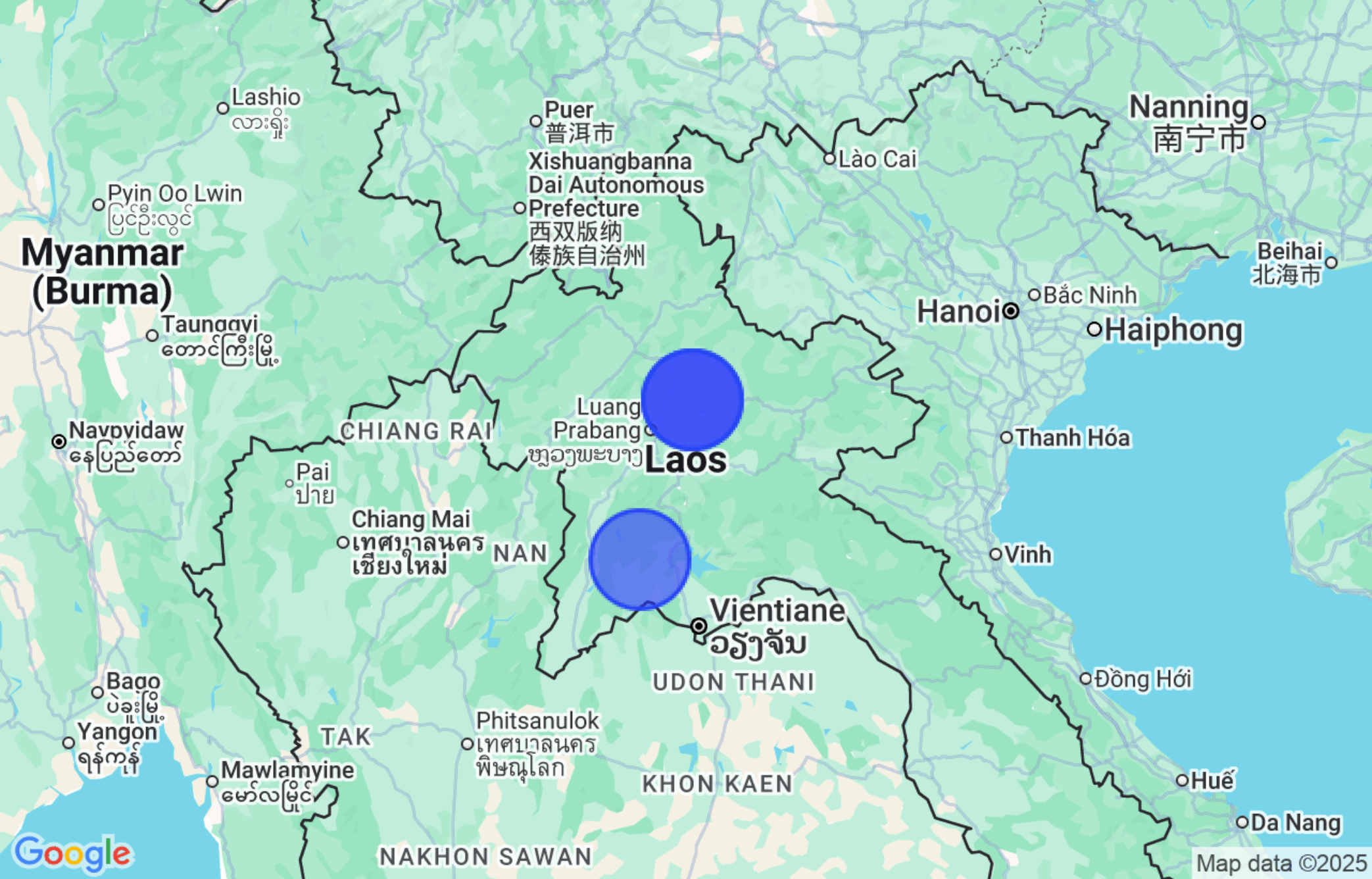 SEMI-URBAN
Vientiane Province
Despite its proximity to the capital, has a semi-urban character with a significant portion of the population engaged in agriculture. The region has substantial arable land, but many farming families lack access to essential financial services.
URBANChampasak Province
The region possesses vast agricultural lands, with many families reliant on farming. The IOA can provide these farming families with improved access to financial services, driving economic growth and reducing poverty.
SEMI-URBANLuang Prabang Province
With substantial agricultural land and numerous families dependent on agriculture. The IOA can significantly provide these farming families with access to financial services, promoting sustainable agriculture and livelihood improvement.
URBANLuang Prabang Province
While urban, is surrounded by rural communities involved heavily in agriculture. The IOA can support these communities, many of whom lack basic financial services, enhancing their capacity to invest in their agricultural activities and improve their livelihoods.
(1) World Bank Data. “Account ownership at a financial institution or with a mobile-money-service provider (% of population ages 15+).” The World Bank, 2021, https://data.worldbank.org/indicator/FX.OWN.TOTL.FE.ZS?locations=LA
(2) Asian Development Bank. “Lao People’s Democratic Republic: Economy.” Asian Development Bank, 2022, https://www.adb.org/countries/lao-pdr/economy
(3) United Nations Capital Development Fund (UNCDF). “Lao PDR Financial Inclusion Refresh (2021).” UN Capital Development Fund, 2021, https://www.uncdf.org/article/7935/lao-pdr-financial-inclusion-refresh-2021
(4) UNCDF. “Lao PDR Financial Inclusion Refresh (2021).” UN Capital Development Fund, 2021, https://www.uncdf.org/article/7935/lao-pdr-financial-inclusion-refresh-2021
(5) UNCDF. “Lao PDR Financial Inclusion Refresh (2021).” UN Capital Development Fund, 2021, https://www.uncdf.org/article/7935/lao-pdr-financial-inclusion-refresh-2021
(6) Investment Promotion Department, Ministry of Planning and Investment. “Financial Sector.” Invest Laos - Lao PDR Investment Promotion Department, Ministry of Planning and Investment, https://investlaos.gov.la/investment-opportunities/financial-sector/
(7) UNCDF. “Lao PDR Financial Inclusion Refresh (2021).” UN Capital Development Fund, 2021, https://www.uncdf.org/article/7935/lao-pdr-financial-inclusion-refresh-2021
(8) World Bank. “Overview: Development News, Research, Data.” World Bank, 2023, https://www.worldbank.org/en/country/lao/overview
(9) 9th Five-Year National Socio-Economic Development Plan (2021-2025). Lao PDR Government, 2021.
(10) World Bank. “Lao PDR.” World Bank, 2023, wbl.worldbank.org/content/dam/documents/wbl/2023/snapshots/Lao-pdr.pdf
(11) World Bank. “Overview: Development News, Research, Data.” World Bank, 2023, https://www.worldbank.org/en/country/lao/overview
(12) World Bank. “Lao PDR Economic Monitor August 2021.” World Bank, 2021, https://pubdocs.worldbank.org/en/147871629861334356/Lao-PDR-Economic-Monitor-August-2021.pdf
(13) “Agricultural Promotion Bank Co., Ltd.” APB, 2023 https://www.apb.com.la/
(14) “Lao PDR Financial Inclusion Refresh (2021).” UNCDF. https://www.uncdf.org/article/7935/lao-pdr-financial-inclusion-refresh-2021
(15) Singh, S. K. “Financial Inclusion and Gender Barriers for Rural Women.” SSRN Electronic Journal, 2019.
(16) ILO. Social Protection Platform https://www.social-protection.org/gimi/ShowCountryProfile.action?iso=LA
(17) United Nations. “Sustainable Development Goals.” United Nations Lao People’s Democratic Republic, 2023, https://laopdr.un.org/en/sdgs/8